WELCOME TO ICMD
Together, we move
from care to cure.
The Intervention Council of Muscular Dystrophy brings families, care teams and researchers together to build a better neuromuscular future.
OUR PURPOSE IN ACTION
A shared commitment to better lives
We bring people, knowledge and care together for the muscular dystrophy community.
Research & registry
Bringing patient experiences and scientific knowledge together to support a stronger future for neuromuscular care.
Discover more 02 / OUR FOCUSCare & counselling
Connecting families with a coordinated approach to guidance, rehabilitation and lifelong wellbeing.
Discover more 03 / OUR FOCUSCommunity & collaboration
Working alongside patients, clinicians, researchers and contributors to move from care to cure.
Discover moreConditions under the muscular dystrophy umbrella
MD umbrella
Male births affected by Duchenne MD
Global estimate
Major forms systematically tracked by ICMD
Registry scope
Disciplines assembled into one care team
Multimodal model
No family should face muscular dystrophy alone — or invisible to science.
The Intervention Council of Muscular Dystrophy was founded with a clear purpose: to help people living with neuromuscular conditions find understanding, guidance and a community that stands alongside them. We bring lived experience and medical knowledge together so that families do not have to navigate the journey alone.
From Bengaluru, our vision brings together a national registry, multidisciplinary care, research and counselling. By connecting families, clinicians and researchers, we aim to strengthen access to reliable information, support daily living and advance the shared journey from care to cure.
A council with a purpose. A future from care to cure.
The Intervention Council of Muscular Dystrophy is a Section 8 not-for-profit company founded with a vision to empower people living with muscular dystrophy and the families who support them. Bringing together clinicians, researchers and the community, we work towards access to the right care, trusted resources and compassionate counselling — with hope for a future cure.
“The day a doctor looked at me and spoke of muscular dystrophy as the beginning of the end of life, my world collapsed. What followed was depression, rejection and humiliation — until I decided that the diagnosis was a starting line, not a finish.”
When the diagnosis first came, the words landed like a sentence. A clinician framed muscular dystrophy as the onset of the end of life, and in that moment every door I could imagine seemed to close at once. I sank into depression. I met rejection at every turn — from employers, from acquaintances, from a world that did not know what to do with a body that was slowly changing. There was humiliation in being seen as diminished, in being spoken about rather than to.
Somewhere in that darkness I refused to accept the verdict. I turned toward research, reading everything I could find on the dystrophinopathies, on gene science, on the trials being run across the world. I enrolled in multiple medical trials, putting my own body forward so that the answers might come sooner for the families behind me. Each trial taught me how much is still unknown — and how urgently people living with these conditions need someone to guide them to the right care.
That urge to guide is what became this council. I want no family to walk the road I walked alone — from the shock of diagnosis to the long search for a clinician who understands, to the wait for genetic confirmation, to the daily work of living well. Counselling, coordinated care, and honest counsel must reach every family, regardless of where they live or who they know.
Our vision is simple and stubborn: from care to cure. Today we assemble the teams, record the data, and stand beside families so that living with muscular dystrophy means living well — with dignity, with support, and with the resources to make each day better than the last.
And we hold onto hope. The science is moving. Gene-targeted therapies, registries that make research possible, and coordinated care are bringing a cure closer. Until that day arrives, the council will not rest at care — we will keep walking toward cure.
The Board of Directors
Intervention Council of Muscular Dystrophy · Section 8 (Non-Profit)
Our vision
From care
to cure.
Care today, cure tomorrow — and a council that refuses to choose between them.
Founded by a patient
The council was founded by a person living with Becker muscular dystrophy — built from the inside of the condition outward, so that no family walks the path we already know.
From Duchenne to Becker — every form has a name, a gene and a plan.
The muscular dystrophies are not one disease but a family of genetic conditions, each with its own inheritance, onset and course. The registry follows the major forms below — and the rarer variants families bring to us.
Becker Muscular Dystrophy
Because Becker can be missed or misdiagnosed as a slow Duchenne or a limb-girdle variant, genetic confirmation is the only reliable way to distinguish it and to guide the right surveillance plan.
- Typical onset
- Adolescence or early adulthood (often 8–25 years)
- Inheritance
- X-linked recessive — affects males primarily; female carriers are usually asymptomatic
- Course
- Slower progression than Duchenne. Many retain ambulation into the 30s or beyond, though the timeline varies widely between individuals.
- Gene
- Dystrophin gene (DMD) — partially functional dystrophin is produced, unlike the near-complete absence in Duchenne.
- Surveillance
- Annual cardiac and respiratory surveillance is essential — heart and lung involvement can progress even when muscle weakness remains mild.
Duchenne MD
DMDThe most common childhood form. Rapid progression, early loss of ambulation, and cardiac/respiratory involvement that demands proactive surveillance.
Becker MD
BMDA milder, later-onset dystrophinopathy. Slower progression, but cardiac risk remains significant — featured below.
Limb-Girdle MD
LGMDA large, genetically diverse group affecting the hip and shoulder girdles first. More than 30 subtypes, each with its own inheritance and course.
Facioscapulohumeral MD
FSHDBegins in the face, shoulders and upper arms. Autosomal dominant, highly variable between family members.
Myotonic Dystrophy
DM1 / DM2The most common adult-onset form. Muscle stiffness (myotonia), cardiac conduction issues and systemic features.
Congenital MD
CMDPresents at or near birth with muscle weakness and often brain involvement. Requires early, coordinated multidisciplinary care.
Emery-Dreifuss MD
EDMDEarly contractures, distinctive muscle pattern, and a high risk of cardiac arrhythmia that needs close monitoring.
Spinal Muscular Atrophy
SMAA motor-neuron disease tracked alongside the dystrophies. Genetic therapies have transformed outcomes where access is timely.
Don’t see your condition listed? The registry accepts any confirmed or suspected genetic neuromuscular diagnosis — write the name in the intake form and our coordinators will follow up.
One person. Eight disciplines. A single coordinated plan.
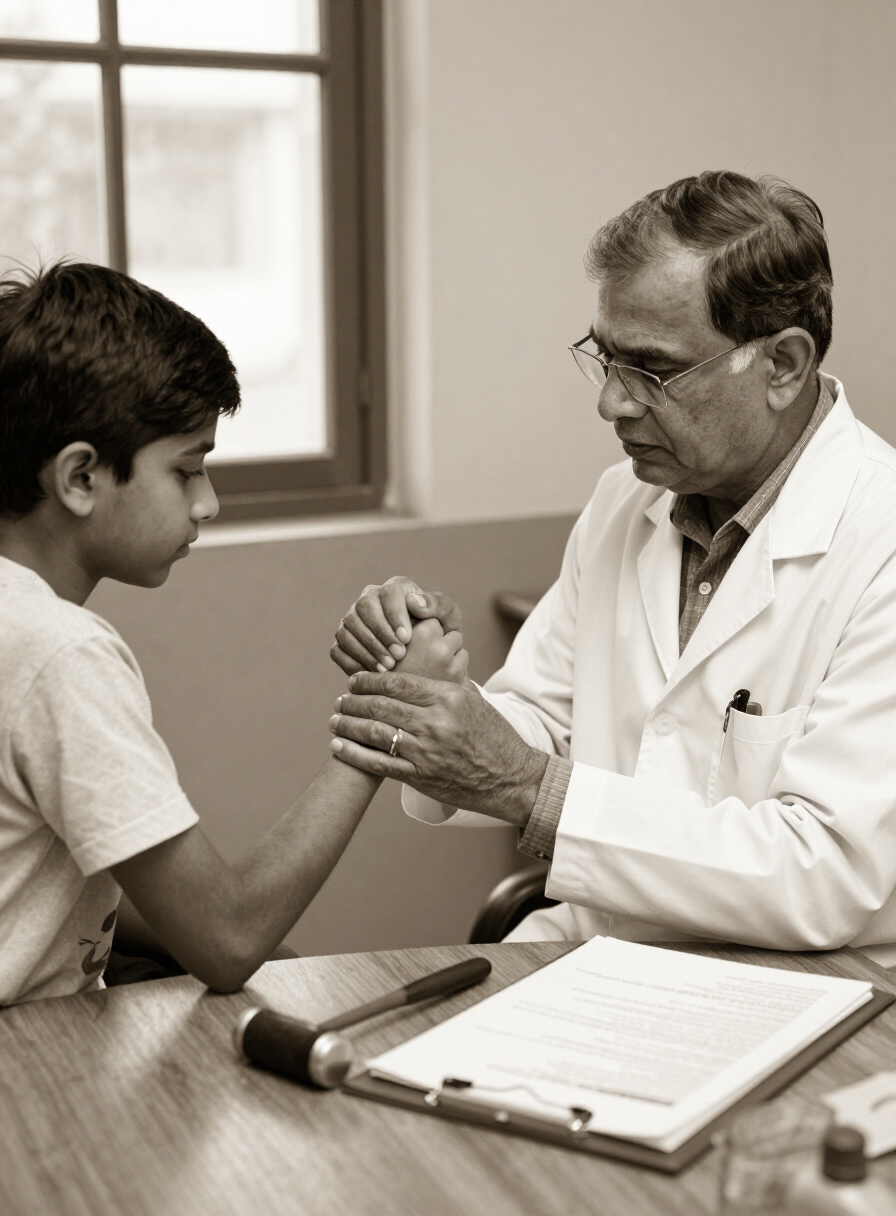
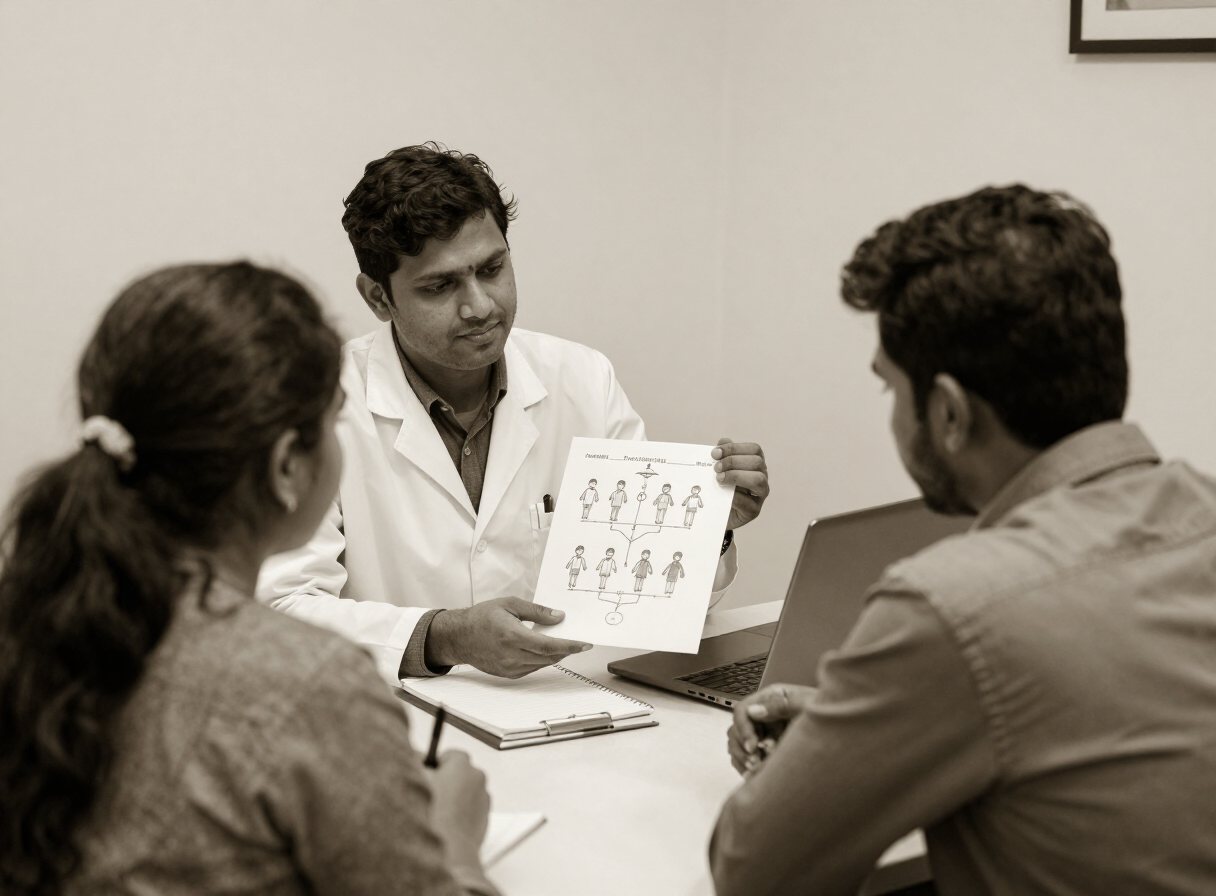
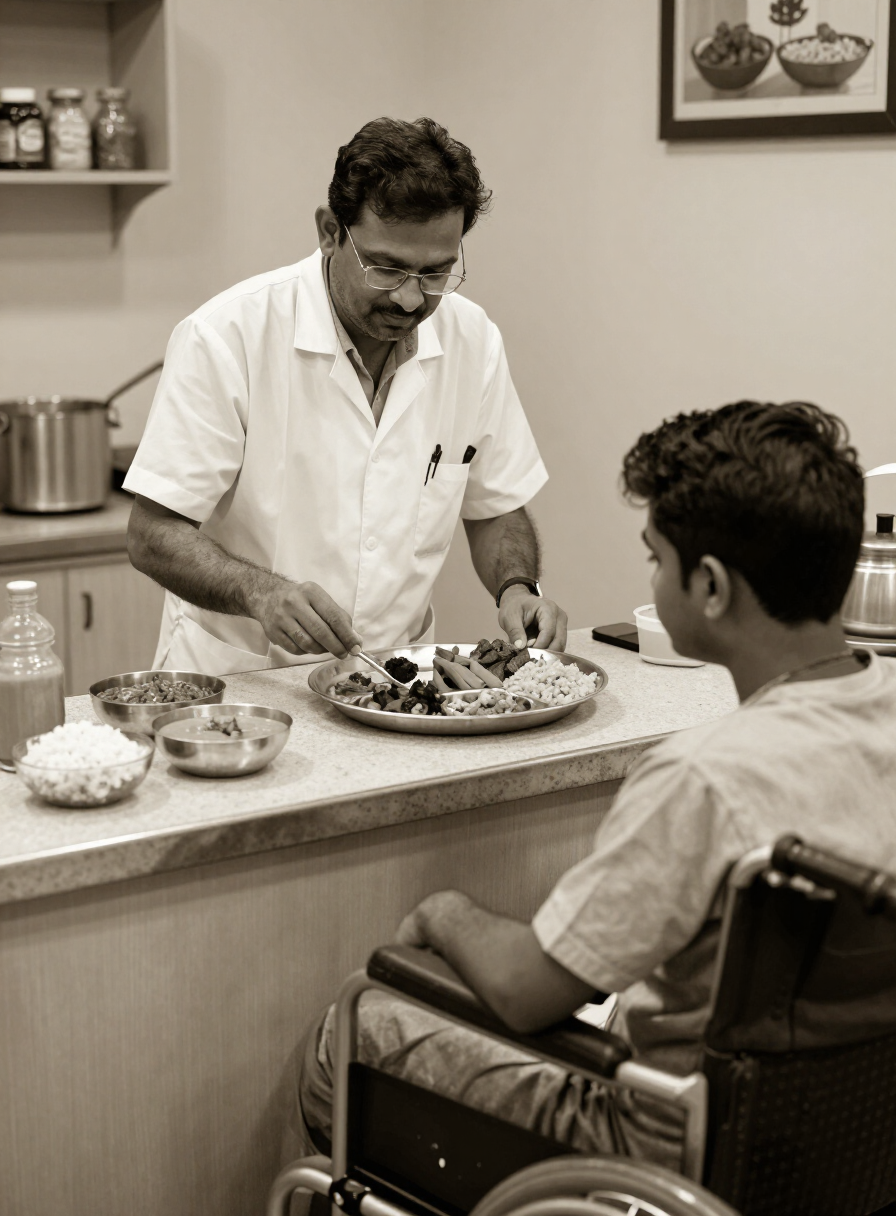
Muscular dystrophy affects many aspects of life. Our multidisciplinary approach brings together medical, rehabilitation and community perspectives around the needs of each person and family.
Neurology
Diagnosis, progression tracking and long-term care planning.
Medical Genetics
Variant confirmation, inheritance mapping and testing access.
Physiotherapy & Rehabilitation
Strength preservation, contracture prevention and mobility.
Genetic Counselling
Family planning, carrier guidance and informed choices.
Cardiology & Pulmonology
Scheduled heart and respiratory surveillance.
Orthopaedics
Spine, posture and surgical counsel when it is truly needed.
Nutrition & Lifestyle
Weight, bone health and daily routines built for Indian homes.
Psychology & Peer Support
Mental health care and community circles that endure.
Every record moves the science forward.
We welcome contributions from patients, families, clinicians and researchers to help build a clearer picture of genetic and neuromuscular conditions. Each contribution can support understanding, inform care and strengthen future research.
What the registry records
Submissions are reviewed by our clinical coordinators before entering the registry. Identities are never published, and families may withdraw a record at any time.
From first symptom to lifelong follow-up.
Record & Listen
Every story enters the registry — a diagnosis, a suspicion, or a family history.
Confirm & Counsel
Genetic confirmation and counselling so families understand what they face.
Assemble the Team
The right disciplines are gathered around one person, not the other way round.
Advise & Adjust
Medical guidance and lifestyle changes that fit real Indian households.
Follow for Life
Scheduled reviews, cardiac and respiratory surveillance, and community.
What we write, what we learn — from the council and beyond.
Long-form notes from our clinicians, coordinators and partners on the science and practice of neuromuscular care in India. Follow the council on LinkedIn for the full series.
Follow the council
More field notes on LinkedIn
We publish ongoing notes on registry science, multimodal care and the families we work with. Read the full series on our LinkedIn page.
A daily brief for the neuromuscular community.
The ICMD agent tracks research direction, practical care updates and questions that matter to families in India. This short brief is a starting point for a deeper conversation, never a substitute for a clinician or a verified source.
Need the context behind a headline?
Ask the ICMD agentAsk the council’s AI help engine.
An interactive assistant trained on the ICMD mission — get plain-language answers on muscular dystrophy conditions, the national registry, our multimodal care model, and how to contribute. Sign in to start a conversation; your history is saved to your account.
The assistant offers information, not medical advice. Always consult a qualified clinician for diagnosis and treatment decisions.
Questions about muscular dystrophy? Start here.
- — Duchenne vs Becker, limb-girdle, FSHD, myotonic, SMA & more
- — How to log a record in the national registry
- — What the eight-discipline care team covers
- — How researchers, doctors & contributors can join
Researchers, doctors, physiotherapists and contributors — start here.
The ICMD ecosystem is built with people, not for them. Choose the form that fits you and tell us how you’d like to work alongside the council. Every request is read by our coordination team in Bengaluru.
Bengaluru.
Our coordination team receives families, clinicians and researchers by email, and responds within five working days.
Refer a patient · Partner with us
A diagnosis you cannot explain belongs in the registry.
Clinicians, hospitals and research groups can connect with the council to support neuromuscular care and research. Write to us, or begin with the intake form.
Open the intake form